Choose your lineup.
Pair a Driver with a Vehicle. Build a 40-card deck of Fuel, Items, and Utilities around the way you want to race.

Build your lineup. Read your rivals. Make the move they didn’t see coming.
Read the full rules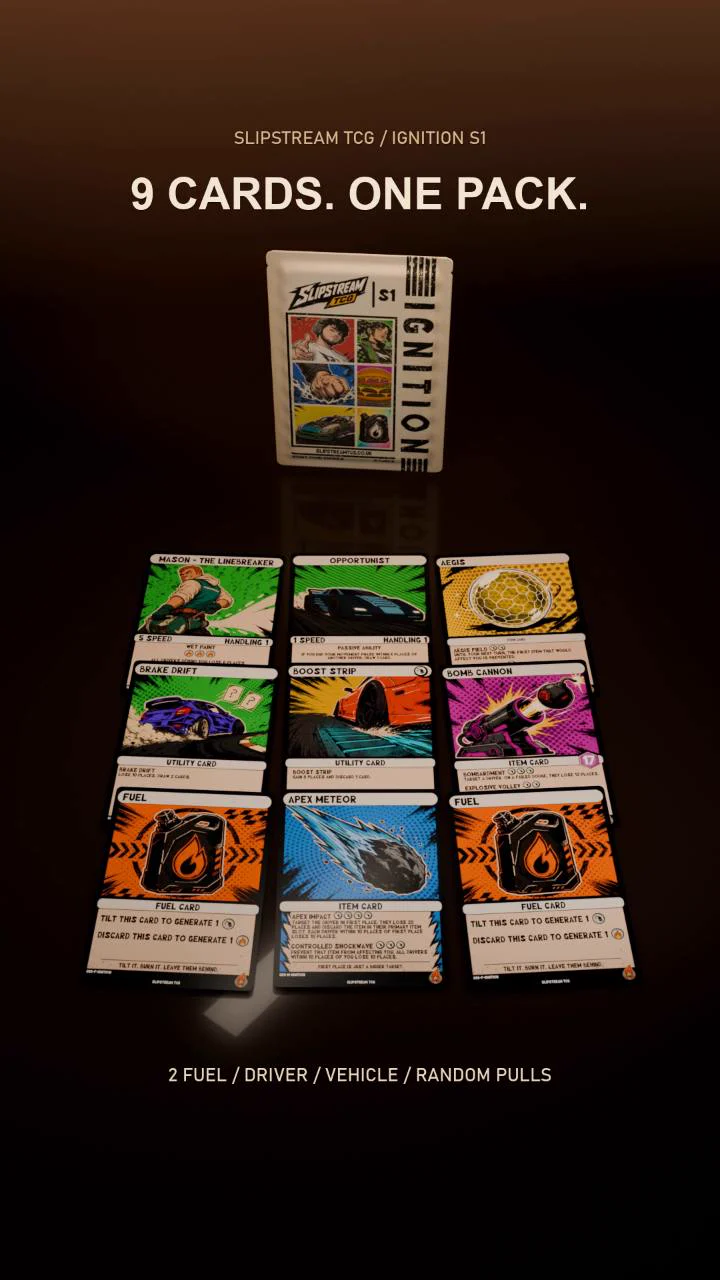
Each player chooses one Driver and one Vehicle, shuffles a 40-card main deck, and draws seven cards.
Set every racer to position zero and agree the finish threshold before play. A standard race finishes at 100 Places. Roll a d20 for turn order, highest first, then clockwise.
You’ll need a complete deck, a Driver, and a Vehicle to play. A booster pack is a selection of cards, not a ready-to-play deck.
Setup and deck limitsPair a Driver with a Vehicle. Build a 40-card deck of Fuel, Items, and Utilities around the way you want to race.
Manage your Fuel, fight for position, and time your reactions. The right card can turn someone else’s lead into your opening.
Reach the agreed finish threshold, then stay there until the start of your next turn. Getting ahead is only half the race.
Every part of your deck has a job.
This is an introduction. Card text overrides general rules; the full rulebook covers timing, reactions, targeting, and exceptions.
Open the full rulebook